
WELCOME BONUS 300%
UP TO €2000 + 100
FREE SPINS
UP TO €2000 + 100
FREE SPINS
Home → Blackjack
Blackjack at 1Go Casino: Variants, Rules and Payouts
Latency under 2 seconds at the live table
The Infinite Blackjack game by Evolution offers a latency threshold under two seconds, ensuring that card distribution feels immediate on mobile devices. This speed contrasts with the Quantum Blackjack Plus Live variant from Playtech, which introduces additional processing time for its quantum multipliers up to 1,000x on three-card combinations. For the player, this means faster decision cycles and more hands per hour compared to slower table variants.
Infinite Blackjack allows unlimited seats at the table with bets ranging from one to five thousand euros, facilitating rapid engagement without waiting for an open spot. The RTP stands at 99.47%, which is slightly lower than the Lightning Blackjack RTP of 99.56% offered by the same provider. Consequently, players seeking higher theoretical returns might prefer the lightning variant, though both maintain low house edges typical of professional blackjack tables.
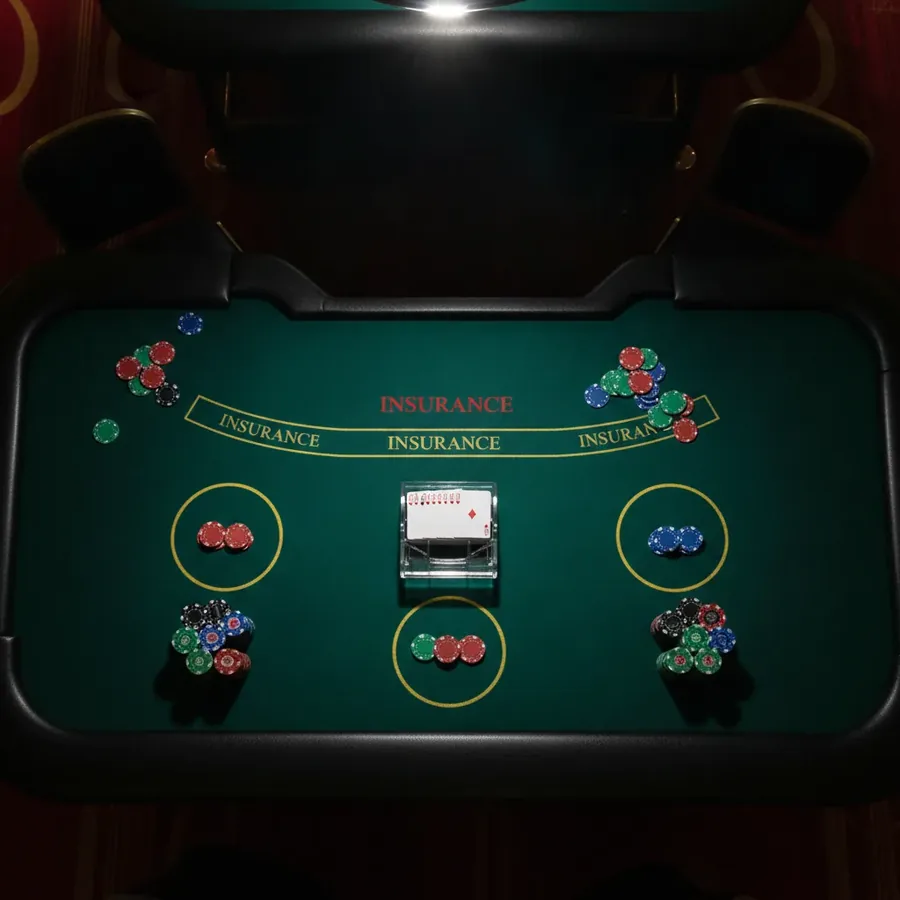
RNG draws cards from virtual eight-deck shoe
The RNG software utilizes a virtual eight-deck shoe to determine card outcomes, establishing a baseline house edge of 0.46% when standard rules apply. This configuration differs significantly from single-deck games, which offer a lower house edge of 0.15% due to reduced deck penetration affecting probability calculations. Players must adjust their strategy accordingly, as the increased number of decks reduces the effectiveness of certain advantage plays.
Six Card Charlie Pays Immediately with Six Cards
A six-card hand totaling twenty-one or less triggers an immediate payout, bypassing the need to compare against the dealer's final score in specific variants. This rule often appears alongside liberal settings like S17 and DAS, which contribute to the high RTP of 99.72% found in Vegas Strip versions. The immediate win provides a distinct advantage over standard play where the dealer might bust with fewer cards, altering risk assessment.
Register Late Surrender correctly in three steps
First, identify a hand where the dealer shows a strong upcard, such as a ten or ace, indicating a high probability of the dealer holding a blackjack. Second, select the surrender option before any additional cards are drawn, which forfeits half your stake but saves the other fifty percent from total loss. Third, confirm the action immediately, as early surrender is rare and late surrender only applies after the dealer checks for blackjack, reducing the house edge by 0.08 percentage points.
Seat change at the Live Table in 20 seconds
Transitioning between seats at the Infinite Blackjack table takes approximately twenty seconds, allowing players to switch providers like Evolution or Playtech without significant downtime. This flexibility is crucial for those tracking different RTPs, such as the 99.57% of Quantum Blackjack Plus Live versus the 99.47% of Infinite Blackjack. Faster seat changes enable better bankroll management across various table limits, which range from one to five thousand euros depending on the game.
Blackjack variants at a glance
| Variant | Payout | House edge | Rule | Bet range |
|---|---|---|---|---|
| Blackjack Surrender (Late Surrender) – Regel-Effekt | n.a. (Regel-Modifikator) | −0.08 Prozentpunkte | Spieler gibt Hand nach Dealer-Blackjack-Prüfung auf, verliert die Hälfte des Einsatzes. Verbessert RTP um ca. 0.08 Prozentpunkte. Early Surrender ist wesentlich wertvoller (bis −0.6 Prozentpunkte), aber extrem selten. | Rückzahlung 50% des Einsatzes |
| Blackjack Ein Deck, klassische Regeln, 3:2 | 99.85% | 0.15% | Weniger Decks = niedrigerer Vorteil; ein Deck gibt ca. −0.48 Prozentpunkte gegenüber 8 Decks. Oft durch 6:5 Auszahlung kompensiert. | Blackjack 3:2, Gewinn 1:1 |
| Blackjack Auszahlung 6:5 statt 3:2 (6 Decks) | 98.15% | 1.85% | Ersatz von 3:2 durch 6:5 fügt exakt +1.39 Prozentpunkte zum Vorteil des Casinos hinzu – stärker als jede andere Regeländerung. Bei $10 Einsatz zahlt Blackjack $12 statt $15. | Blackjack 6:5, Gewinn 1:1 |
| Blackjack Split / Double / H17 – Regel-Effekte | n.a. (Regel-Modifikatoren) | H17 +0.22 Prozentpunkte; RSA −0.08 Prozentpunkte; DAS −0.14 Prozentpunkte | Dealer Hits Soft 17 verschlechtert RTP um 0.22 Prozentpunkte; Resplit Aces verbessert um 0.08 Prozentpunkte; Double After Split verbessert um ca. 0.14 Prozentpunkte; 6 Decks statt 8 – ca. 0.02 Prozentpunkte. | Double – Einsatz ×2 mit einer Karte; Split – bis 4 Hände; Ass-Split meist mit einer Karte. |
| Blackjack 6 Decks, S17, DAS, DOA, Auszahlung 3:2, Basisstrategie | 99.54% | 0.46% | Dealer steht auf Soft 17; Verdopplung auf jeder Zweierkarte; Verdopplung nach Split erlaubt; keine Aufgabe. Basisstrategie ist für diesen Wert zwingend | Blackjack 3:2, normaler Gewinn 1:1, Insurance 2:1 |
| Blackjack Liberal Vegas Strip (liberale Regeln, 3:2) | 99.72% | 0.28% | Günstigste Regelkombination: S17 + DAS + Resplit + Late Surrender. Standardabweichung 1,15 | Blackjack 3:2, Gewinn 1:1 |
Card Counting at Shuffle Master Table: why it fails
The Infinite Blackjack table by Evolution imposes a strict limit on player advantage by using continuous shuffling mechanisms that reset the deck composition after every single hand. This operational constant ensures that the theoretical house edge remains fixed at its baseline of 99.47% RTP, regardless of any previous card distribution patterns observed by the player. Consequently, any attempt to track card removal becomes mathematically irrelevant, as the shoe is effectively infinite and offers no statistical drift for the observer to exploit.
Side bets such as Any Pair, 21+3, Hot 3, and Bust It operate with significantly higher volatility and lower return percentages compared to the main game's 99.47% yield. These auxiliary wagers introduce additional variance into the session without altering the core card counting mechanics, which are already neutralized by the automatic shuffle protocol. Players focusing on these side markets will experience faster bankroll depletion due to their distinct mathematical properties separate from the base game strategy.
Lightning Blackjack introduces a different layer of complexity where multipliers up to 25x apply to winning hands, yet the underlying RTP stays stable at 99.56%. The random nature of these lightning strikes does not provide predictable card sequences, further invalidating any count-based strategies that rely on known deck penetration. The combination of frequent shuffling and random multipliers ensures that traditional card counting techniques remain entirely ineffective throughout the entire playing session.
Side Bet Every Round: Budget Lasts 30 Rounds
Infinite Blackjack allows players to place four distinct side bets including Any Pair, 21+3, Hot 3, and Bust It alongside the main wager during each dealt round. The betting range for the primary game spans from 1 EUR to 5,000 EUR, but adding multiple side propositions significantly increases the total cost per decision cycle. A standard unit bet combined with all available side options can consume a substantial portion of a small bankroll within a very short timeframe.
Quantum Blackjack Plus Live from Playtech features quantum multipliers reaching up to 1,000x on three-card combinations totaling 21 points, which dramatically alters the risk profile of each round. The table accepts stakes between 1 EUR and 5,000 EUR, meaning that placing side bets on every hand at the minimum limit still accumulates costs rapidly. With an RTP of 99.57% under optimal conditions, the presence of high-variance side bets reduces the longevity of a fixed budget when used consistently.
A dedicated budget of 30 rounds represents a practical testing ground for understanding how side bets impact overall session duration across different live dealer platforms. If a player commits to betting on every round, the cumulative cost of the side propositions against the main game stake will deplete funds much faster than base play alone. This limitation highlights the importance of selective wagering rather than mandatory inclusion of all available side markets in every single hand dealt.
Double Down after Split: which tables allow it
Blackjack 6 Decks rules explicitly permit doubling down after splitting (DAS), a feature that significantly lowers the house edge by allowing players to increase their stake on favorable split hands. This rule contributes a negative adjustment of approximately 0.14 percentage points to the house advantage, improving the overall RTP to 99.54% when combined with other liberal conditions. Players utilizing this option must adhere strictly to basic strategy to maximize the mathematical benefit provided by the expanded doubling opportunities.
The availability of DAS varies across different variants, with some tables restricting doubling only to specific card totals or prohibiting it entirely after a split occurs. In contrast, the 6-deck variant supports doubling on any two cards after a split, offering greater flexibility compared to restrictive versions that might limit this action. This distinction is critical for players seeking to optimize their expected value, as the inability to double after split increases the casino's inherent advantage substantially.
Live dealer games like Lightning Blackjack focus on multiplier bonuses rather than complex rule variations like DAS, often simplifying the gameplay structure for broader accessibility. While Evolution's title offers unlimited seats and multipliers up to 25x, it may not replicate the full depth of traditional rule sets found in static RNG versions. Players prioritizing advanced strategic tools should verify the specific rule set of the live table, as convenience features often replace nuanced mechanical options.
What Peek Means with a Dealer Ace
When the dealer shows an Ace, they perform a peek to check for a natural blackjack before requiring players to make decisions on their own hands. This procedure prevents players from losing their initial bet or insurance wagers if the dealer already holds a twenty-one, thereby protecting the integrity of the game flow. The outcome of this peek directly influences whether side bets like Insurance are resolved immediately or if the hand continues based on the dealer's final total.
Insurance bets pay out at 2:1 odds if the dealer indeed has blackjack, but the overall RTP for this side bet drops sharply to 92.53% due to the high house edge of 7.47%. Basic strategy dictates always rejecting insurance unless the player is counting cards and the true count reaches +3 or higher, making it a generally unfavorable proposition for average participants. The peek mechanism ensures that these payouts are triggered correctly without delaying the game for non-insurance players.
Late surrender rules allow players to forfeit half their bet after the dealer has confirmed they do not have blackjack, providing a minor reduction in house edge by about 0.08 percentage points. This option is only available post-peek, ensuring that players do not surrender unnecessarily when the dealer already holds a natural twenty-one. Combining late surrender with proper basic strategy helps mitigate losses in stiff hands, offering a slight mathematical advantage over games lacking this provision.
When does the table max bet apply?
Infinite Blackjack from Evolution enforces a maximum bet limit of 5,000 EUR per hand, capping the potential exposure for both the player and the operator during high-stakes sessions. This ceiling applies to the total wager placed on the main game and potentially side bets depending on the specific table configuration established by the provider. High rollers must ensure their combined bets do not exceed this threshold to avoid voiding winnings or facing account restrictions during active play.
Quantum Blackjack Plus Live also sets a maximum stake limit of 5,000 EUR, aligning with other premium live dealer offerings to manage risk across unlimited seating arrangements. The presence of quantum multipliers up to 1,000x means that even moderate bets can result in significant payouts, justifying the strict upper bound on initial wagers. Players aiming for large wins must navigate these limits carefully, as exceeding the maximum bet renders the hand invalid regardless of the outcome.
The welcome bonus terms impose separate constraints on betting limits while bonus funds are active, typically requiring adherence to lower maximum stakes to fulfill wagering requirements. Since table games contribute only 10% toward the bonus turnover, players must wager larger amounts compared to slots, increasing the risk of breaching table limits if not managed properly. Understanding both the casino's financial caps and the bonus-specific restrictions is essential for maintaining compliance and securing potential withdrawals.
Statistics display saves the last 100 rounds
Infinite Blackjack provides a comprehensive interface that records the results of every hand played during the session. This feature tracks the outcomes for up to 100 rounds, allowing players to analyze recent trends without relying on memory or guesswork. The data remains visible on the screen throughout the gameplay, ensuring transparency regarding the immediate history of the table.
The limit of 100 rounds applies specifically to the Infinite Blackjack variant offered by Evolution, which supports bets ranging from 1 to 5,000 EUR. This cap ensures that the display remains manageable and relevant for strategic decision-making rather than overwhelming the user with excessive historical data. Players can review these specific rounds to adjust their betting patterns based on recent performance metrics available in real time.
Accessing this statistical summary is particularly useful for those utilizing side bets like Any Pair or Bust It within the live environment. Since Infinite Blackjack allows unlimited seats, individual players must rely on the shared statistics to understand the flow of the shoe. The retention of 100 rounds offers a sufficient sample size to evaluate short-term variance without compromising the speed of the game.
Quantum Blackjack Plus Live also features similar tracking capabilities but focuses on the frequency of Quantum Multipliers appearing in the sequence. These multipliers can reach up to 1,000x on three-card combinations totaling 21 points, making the round history crucial for spotting potential high-value events. Tracking these specific occurrences helps players manage their bankroll more effectively when anticipating large payouts from the special multiplier rules.
16 vs 10 played incorrectly: most common error
Standard deviation calculations for the Liberal Vegas Strip variant show a value of 1.15, indicating significant volatility even with optimal play. When a player holds a hard 16 against a dealer ten, the mathematically correct move is often to surrender if Late Surrender is permitted. Failing to execute this surrender results in a higher expected loss compared to hitting or standing under standard rule sets.
The House Edge for the base game sits at 0.28 percent, but playing 16 versus 10 without surrender increases this burden significantly. By choosing to hit instead of surrendering, the player accepts a much higher probability of busting or losing to a strong dealer hand. This specific error negates the benefit of the favorable S17 and DAS rules that typically keep the house advantage low at 0.46 percent.
Late Surrender improves the overall RTP by approximately 0.08 percentage points, making it a valuable tool for minimizing losses in tough spots. If the casino does not offer this rule, the player must rely on strict basic strategy charts that mandate folding the hand initially. Ignoring this advice transforms a manageable loss into a guaranteed depletion of the stake due to poor tactical decisions.
The impact of this error is magnified in games with six decks where the Dealer stands on Soft 17 and allows doubling after splits. In such configurations, the reduced card density makes drawing a ten-value card more probable, worsening the outcome of hitting 16. Recognizing this mathematical reality prevents players from making costly emotional decisions during high-pressure moments at the table.
Step-by-step Split at the Live Table
Splitting pairs is a fundamental tactic in Blackjack, allowing players to divide identical cards into two separate hands with equal additional wagers. This action is permitted up to four hands in most variants, provided the casino rules allow resplitting for non-Ace cards. Players must place a new bet equal to their original stake to activate the second hand, increasing total exposure immediately.
Resplitting Aces is a critical exception that usually restricts players to receiving only one additional card per split Ace. This limitation reduces the potential profitability of splitting Aces compared to other pairs, as the chance of improving to a strong total is minimized. Consequently, many advanced strategies advise against resplitting Aces unless specific favorable rules apply to compensate for the restricted drawing opportunity.
Double After Split (DAS) significantly enhances the value of splitting pairs by allowing further doubling on the resulting hands. This rule improves the Return to Player by approximately 0.14 percentage points, making it a highly desirable feature for strategic players. Without DAS, the flexibility to capitalize on favorable post-split cards is severely limited, reducing the overall effectiveness of the splitting strategy.
Lightning Blackjack introduces unique constraints on splitting due to its focus on Lightning Multipliers applied to winning hands. While the base RTP remains high at 99.56 percent, the presence of multipliers up to 25x changes the risk calculation for each split decision. Players must weigh the potential for multiplied payouts against the increased house edge introduced by the random multiplier mechanics during the split phase.
Bonus Lost Due to 10 Percent Contribution
The welcome bonus offers 300 percent up to 2,000 euros plus 100 free spins, creating a substantial initial bankroll for new registrants. However, the contribution rate for table games is strictly limited to 10 percent toward the wagering requirement, drastically slowing progress compared to slots. A player depositing 1,000 euros receives a 3,000 euro bonus, requiring significant turnover to unlock withdrawable funds.
Calculating the required turnover reveals that 100 euros wagered on Blackjack only counts as 10 euros toward the bonus clearance. To clear a 40x wagering requirement on a 3,000 euro bonus, a player must actually wager 120,000 euros at the table. This massive discrepancy makes table games an inefficient vehicle for converting bonus funds into real cash compared to other gaming options.
Slots contribute 100 percent to the wagering requirement, meaning every euro spent directly reduces the outstanding balance. In contrast, the 10 percent contribution for Blackjack means players are essentially paying ten times more to achieve the same clearance milestone. This structural disadvantage encourages players to avoid table games entirely until they have fully satisfied the bonus conditions through faster-contributing titles.
The house edge of 0.46 percent on standard six-deck games further erodes the bankroll during the extended wagering period. Combining this edge with the low contribution rate creates a double penalty that often results in the complete loss of the bonus before clearance. Players should carefully calculate the expected loss based on the actual turnover needed to ensure the strategy remains viable.
Surrender rules provide a minor mitigation by reducing the house edge by 0.08 percentage points, but this effect is negligible against the contribution barrier. Even with perfect strategy, the mathematical expectation remains heavily skewed against bonus hunters using table games for clearance purposes. Understanding this limitation is essential for managing expectations and avoiding unnecessary financial strain during the promotion period.
Split, Double Down, and Surrender in Numbers
Splitting pairs increases the number of active hands, thereby multiplying the total amount of money exposed to the house edge simultaneously. Each split hand requires an additional bet equal to the original stake, effectively doubling the risk if two hands are created. This expansion of liability must be balanced against the potential gain from separating weak starting cards into stronger independent positions.
Double Down allows players to double their initial wager in exchange for receiving exactly one more card, optimizing profit on strong starting totals. This action is permitted on any two-card combination, including those formed after a split if the Double After Split rule is active. The increased risk is justified by the statistical advantage gained when the remaining deck contains a high concentration of ten-value cards.
Surrender permits players to forfeit half their bet and end the hand immediately, mitigating losses in unfavorable situations like holding 16 against a ten. Late Surrender improves the RTP by approximately 0.08 percentage points, offering a slight edge over standard play without the option. Early Surrender, though rarely available, can improve the RTP by up to 0.6 percentage points, providing a significant strategic advantage.
Insurance represents a separate side bet paying 2:1 if the dealer has a blackjack, but it carries a high house edge of 7.47 percent. This bet is generally discouraged unless the player is counting cards and holds a true count of +3 or higher. For the average player, accepting insurance increases the overall cost of the game without providing a long-term profitable return on investment.
The payout structure of 3:2 for a natural blackjack versus 6:5 significantly impacts the bottom line, adding 1.39 percentage points to the house edge. A 6:5 payout on a 10 euro bet yields 12 euros instead of 15, representing a substantial reduction in potential winnings. Avoiding tables with 6:5 payouts is crucial for maintaining a competitive return rate close to the theoretical maximum of 99.85 percent.
Contact
Live - online chat
Banking









Providers












1Go Casino 2026